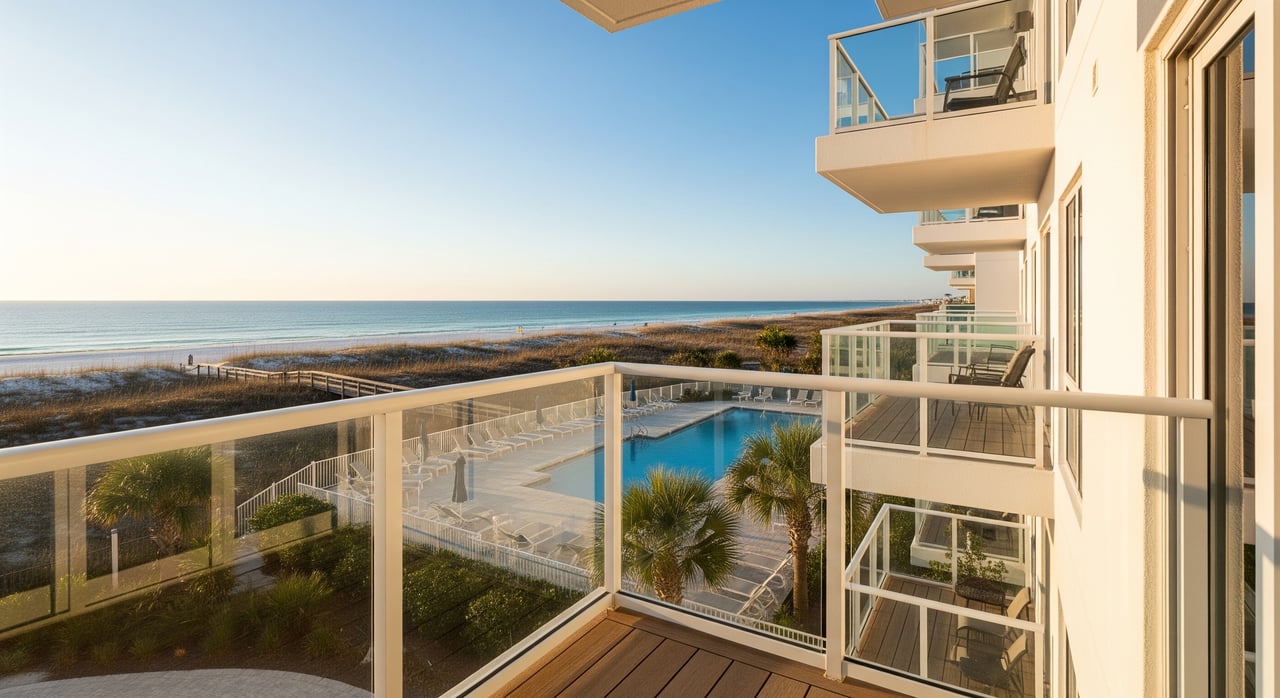
Florida Condo Insurance And Reserves: Destin Buyer Impact
December 4, 2025
December 4, 2025
Thinking about a Destin condo and wondering why the fees and insurance quotes feel all over the map? You’re not alone. On the Emerald Coast, insurance terms and association reserves can change your true monthly cost far more than list price or HOA dues. This guide breaks down how Florida condo insurance works, what reserves really mean, and the documents you should review so you can buy with confidence. Let’s dive in.
Destin sits on the Gulf of Mexico, so hurricane wind, storm surge, and heavy rainfall are core risks. Flood risk is separate from wind coverage and needs its own consideration. Many buildings near the shore were built decades ago, which means age, construction type, roof condition, and maintenance history matter to insurers and to your long-term costs.
Local permitting and building codes in Okaloosa County, along with any retrofits, roof replacements, exterior repairs, or wind-mitigation upgrades, can influence insurability and timing of major work. FEMA flood maps and floodplain designations help determine whether flood insurance is required or simply smart to carry. All of this rolls into association budgets, premiums, and reserve needs you’ll inherit as an owner.
Condo insurance typically has two layers:
Master policies vary by building:
Always verify the association’s actual policy form. The wording decides who covers what.
Ask for the full master policy or certificate of insurance. Confirm:
These details affect both your HO-6 design and your risk of special assessments after a storm.
Many Florida associations carry hurricane or named-storm deductibles as a percentage of the insured value. Industry discussions often reference ranges like 1 to 5 percent. The exact number varies by building and insurer. Because the deductible can be large, an underfunded association may need to pass costs to owners through special assessments after a covered loss.
Illustrative example: If a building is insured for $10,000,000 and the hurricane deductible is 2 percent, the deductible is $200,000. If reserves cannot cover it, that amount may be allocated among owners or financed, increasing your out-of-pocket exposure. Percentages and insured values vary, so always check your building’s specifics.
Your HO-6 should fit the master policy. If the association covers only the shell, you likely need coverage for interior fixtures and improvements. If the association covers some interiors, focus on improvements you made and your contents. Consider loss-assessment coverage that can help with your share of a covered loss or deductible if the association’s policy triggers an assessment.
Association reserves are savings accounts for predictable big-ticket items. Think roofs, elevators, exterior painting, building envelope work, common-area HVAC, pools, and seawalls. Healthy reserves reduce the need for emergency special assessments and loans when these projects come due.
Many associations use reserve studies to estimate timing and costs for capital repairs. Some fully fund the recommended amounts. Others partially fund or vote to defer. The level of funding is a key risk indicator. Two buildings with similar dues can have very different reserve health and near-term capital needs.
If a major repair or storm loss exceeds available reserves and insurance proceeds, the association may levy a special assessment on every owner or take out a loan. Both options increase carrying costs. Reviewing the association’s financials, claims history, and planned projects helps you predict the likelihood of special assessments.
Pro tip: HOA dues often include both insurance premiums and reserve contributions. Low dues can look attractive but may signal underfunded reserves.
Gather these early from the seller, listing broker, or association:
Focus on these questions as you review:
When you compare two Destin condos with similar dues, dig deeper. One association might be fully funding reserves with recent roof and envelope work complete. The other might have deferred projects and a higher hurricane deductible. The latter could expose you to larger assessments even if the dues look lower today.
If you are buying for vacation rental potential, factor in the stability of carrying costs. Insurance, reserves, and upcoming capital work can affect your cash flow more than small differences in list price. Unit age, elevation, and flood zone are also important. Flood insurance is separate from wind coverage and may be required by a lender based on flood maps and base flood elevation.
Florida’s insurance market has seen premium increases, changing underwriting, and wider use of the insurer of last resort in some areas. After the 2021 Surfside condominium collapse, there has been greater focus on building safety, reserves, and inspection and disclosure obligations. Okaloosa County conditions can differ from statewide averages, so review building-specific records and association documents for the clearest picture.
A clear plan helps you move fast on the right property and avoid costly surprises:
When you are ready, our team can coordinate fast, private showings and help you organize these materials so you can make a confident decision.
Ready to find the right Destin condo and budget it precisely? Schedule a conversation with Edward Wall to plan your search and due diligence timeline.
Keeping on top of the latest interior design trends is always a challenge.
Insider tips on how to craft a purchase offer that satisfies your needs.

Here’s a look at the expectations of real estate experts for 2023.
When you sell something, it’s important to consider what your customer wants to buy.
Edward decided to come out of retirement and achieved his Real Estate License. Now with his company, RealtorWithWings, LLC, he can offer an unparalleled experience for his real estate clients, by providing transportation by air and by boat whenever it’s advantageous.